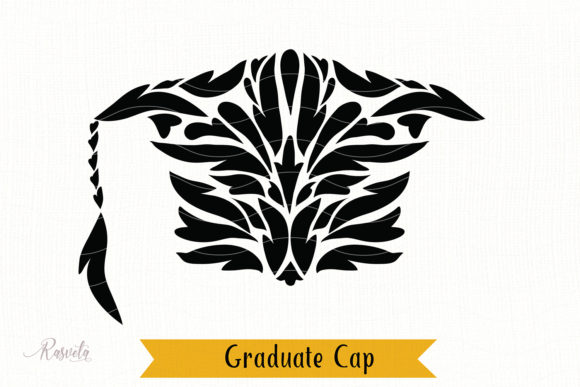
Graduate Hat in a Floral Ornament: Evaluating Design Versatility and File Compatibility for Senior Celebrations
Selecting the right visual assets for graduation projects requires balancing aesthetic appeal with technical functionality. The Graduate Hat in a Floral Ornament design represents a specific intersection of traditional academic symbolism and organic decorative elements. Unlike standard, rigid mortarboard icons, this style integrates botanical motifs to soften the geometric lines of the cap, creating a silhouette that is both celebratory and elegant. For adults planning Class of 2020 memorabilia or current senior events, understanding the distinct characteristics of this design category helps in determining whether it aligns with specific crafting capabilities and project goals.
Distinguishing Characteristics of Floral Academic Silhouettes
The primary distinction of a Graduate Hat in a Floral Ornament lies in its compositional balance. Standard graduation vectors often prioritize high contrast and simple shapes for rapid cutting on vinyl plotters. While efficient, these can sometimes appear sterile or overly utilitarian. In contrast, the floral ornament variation introduces negative space complexity and organic curves. This design choice serves a dual purpose: it maintains the immediate recognition of the graduation cap while adding a layer of sophistication suitable for formal invitations, glass etching, and detailed paper crafts.
This specific design package includes a graceful pattern variant alongside the primary floral ornament. The inclusion of multiple stylistic interpretations within a single bundle addresses a common pain point in digital asset acquisition: the need for cohesive variety. When comparing this to standalone silhouette files, the bundled approach offers greater flexibility. A user might employ the intricate floral version for a centerpiece or wall decal where detail is visible up close, while utilizing the simpler graceful pattern for smaller applications like cupcake toppers or envelope seals where fine details might be lost during the weeding process.
Evaluating Format Utility Across Cutting Platforms
A critical factor in choosing digital cut files is compatibility with existing hardware ecosystems. This package provides five distinct formats, each serving a specific technical function that users must evaluate against their equipment.
- SVG (Scalable Vector Graphics): This is the industry standard for Cricut Design Space and Silhouette Designer Edition. Vectors allow for infinite scaling without pixelation. For a Graduate Hat in a Floral Ornament, SVG is essential because resizing a complex floral design to fit different surfaces—from a 4-inch coaster to a 24-inch window cling—must preserve the integrity of the petal edges and tassel strands.
- DXF (Drawing Exchange Format): Specifically included for Silhouette Basic Edition users who lack native SVG support. DXF files are line-based rather than object-based. Users should note that importing DXF files into basic software may result in designs appearing as ungrouped lines requiring manual reassembly. This format is a necessary tradeoff for accessibility but demands more preparation time compared to plug-and-play SVGs.
- PNG (Portable Network Graphics): Provided at 300 DPI with a transparent background. While not a vector format, high-resolution PNGs are vital for sublimation printing, direct-to-garment transfers, and digital mockups. The file naming convention corresponds directly to the SVG files, streamlining organization. However, unlike vectors, PNGs have fixed dimensions; enlarging them beyond their native resolution will degrade quality.
- JPEG: Best suited for reference images, web displays, or non-transparent print materials. It lacks the alpha channel required for clean cutting or overlaying, making it less useful for fabrication but valuable for visual planning.
- EPS10: A professional-grade vector format compatible with Adobe Illustrator and CorelDRAW. This is relevant for users who wish to modify the Graduate Hat in a Floral Ornament design itself—changing colors, altering flower types, or adjusting line weights—before exporting for cutting.
Comparative Analysis: Floral Ornaments vs. Minimalist Silhouettes
When researching graduation graphics, decision-makers often weigh ornate designs against minimalist alternatives. Understanding the tradeoffs ensures the selected asset matches the intended application and skill level.
Complexity and Material Considerations
Minimalist silhouettes are generally forgiving. They cut quickly, weed easily, and work well on textured surfaces like glitter cardstock or rough canvas. A Graduate Hat in a Floral Ornament, however, introduces higher complexity. The intricate intersections between the hat brim and floral elements require sharper blades, slower cutting speeds, and smoother materials. Vinyl with aggressive adhesive or low-tack transfer tape is often necessary to prevent delicate floral points from lifting during weeding.
If the end goal is a large-scale banner viewed from a distance, the fine details of a floral ornament may become visual noise, making a bold, solid silhouette the superior functional choice. Conversely, for intimate items like jewelry tags, wine glass charms, or premium stationery, the minimalist option may lack the perceived value and artisanal quality that the floral ornament provides. The decision ultimately hinges on viewing distance and material texture.
Customization Potential for Specific Cohorts
The "Class of 2020" designation holds unique historical significance due to disrupted ceremonies and virtual graduations. Designs associated with this cohort often carry heavier emotional weight. A Graduate Hat in a Floral Ornament offers a softer, more commemorative tone that aligns well with retrospective tributes or "resilience" themed parties. The organic nature of florals symbolizes growth and renewal, which may resonate more deeply for this specific demographic than stark geometric caps.
However, users must consider editability. If the purchased file is a flattened raster image or a locked vector group, changing "2020" to a current year or adding a graduate’s name becomes difficult. The EPS10 and SVG formats in this package mitigate this risk by providing editable paths. When comparing resources, always verify if text elements are outlined (static) or live text (editable). Outlined text preserves font styling across devices but prevents content updates; live text allows personalization but requires matching fonts.
Decision Factors for Project Suitability
Determining whether this specific design package is the right investment involves assessing three practical variables: output scale, production volume, and aesthetic alignment.
Output Scale and Resolution Requirements
For projects exceeding 12 inches in width, vector formats (SVG/EPS) are non-negotiable. The 300 DPI PNG included in this package is high resolution, but it has a ceiling. If you plan to create a backdrop for photo booths or large yard signs, relying solely on the PNG may result in jagged edges. Users intending to produce large-format prints should prioritize packages that include vectors or confirm the PNG dimensions meet their size requirements before purchase. For standard craft sizes (mugs, shirts, cards), the provided resolutions are typically sufficient.
Production Volume and Efficiency
Time is a tangible cost in crafting. If producing fifty identical favors for a graduation party, the additional weeding time required for a Graduate Hat in a Floral Ornament compounds significantly. In high-volume scenarios, crafters often opt for simplified versions or use the floral design only for feature pieces while using simpler coordinating patterns for bulk items. The inclusion of both the floral ornament and the graceful pattern in this bundle supports this hybrid workflow, allowing makers to maintain thematic consistency without sacrificing production efficiency.
Aesthetic Alignment with Event Tone
Not all graduation celebrations share the same atmosphere. Formal dinners and garden parties naturally accommodate floral aesthetics. Sports-centric celebrations or modern, industrial-themed events may clash with ornate botanicals. Before acquiring assets, evaluate the broader design language of the event. If the invitation suite already features heavy typography and metallic accents, a delicate floral hat might feel disjointed. In such cases, a structured, linear cap design would provide better visual harmony. The Graduate Hat in a Floral Ornament excels in romantic, vintage, or nature-inspired contexts but requires careful integration in minimalist or masculine design schemes.
Technical Best Practices for Implementation
To maximize the utility of this design package, users should adopt specific workflow habits. Always test cut complex floral designs on scrap material before committing to final stock. Adjust blade depth and pressure specifically for the smallest internal details of the ornament; settings optimized for the outer hat shape may overcut delicate petals. When using the DXF file in Silhouette Basic, group all elements immediately after import to prevent accidental displacement. For sublimation projects using the PNG, ensure your printer profile accounts for the transparency to avoid unwanted gray halos around the floral edges.
Ultimately, the value of a Graduate Hat in a Floral Ornament cut file extends beyond the initial download. Its worth is determined by how well its complexity matches your tools, how its aesthetic fits your event, and whether its file formats support your long-term creative needs. By critically evaluating these factors against simpler alternatives and technical constraints, makers can select resources that enhance rather than complicate their celebration planning.