Strategic Application of the Watercolor Hand Painted Floral Wreath in Professional Design
In the landscape of digital asset management and brand communication, visual elements serve as more than mere decoration; they function as strategic signals that convey tone, quality, and intent. The Watercolor Hand Painted Floral Wreath represents a specific category of design asset that bridges the gap between organic artistry and professional utility. For entrepreneurs, marketers, and creators, understanding the technical specifications and strategic applications of this asset is essential for maximizing return on creative investment. This is not simply about adding flowers to a layout; it is about leveraging high-resolution, hand-painted authenticity to establish trust, soften corporate messaging, and create versatile branding touchpoints that resonate with diverse audiences.
Technical Specifications as a Foundation for Versatility
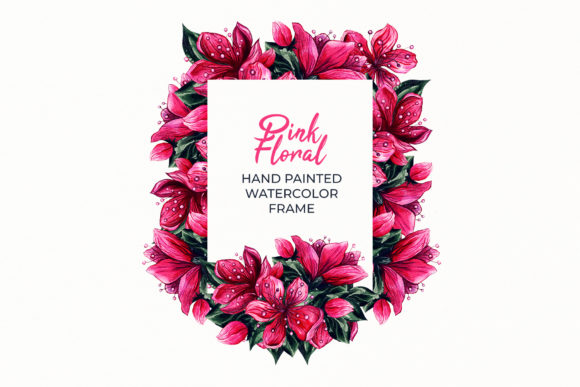
Before integrating any visual asset into a professional workflow, one must evaluate its technical viability across various media. The specific configuration of this Watercolor Hand Painted Floral Wreath addresses common friction points in design production. The file is delivered as a single PNG with a transparent background, measuring 3600 x 4163 pixels at 300 DPI. These specifications are not arbitrary; they represent a deliberate balance between usability and quality assurance.
The transparency of the PNG format is critical for operational efficiency. Unlike JPEGs that carry white backgrounds requiring tedious masking or extraction, this asset allows for immediate drag-and-drop integration into existing projects. For freelancers and agency designers working under tight deadlines, this eliminates hours of pre-production cleanup. The dimensions, approximately 12 x 13.9 inches, provide sufficient pixel density for large-format printing while remaining manageable for digital layouts. At 300 DPI, the file meets the industry standard for commercial print quality, ensuring that watercolor textures remain crisp on business cards, packaging, and signage without pixelation. This resolution also future-proofs the asset for high-density retina displays, where low-resolution graphics often appear unprofessional and degrade user experience.
Elevating Brand Positioning Through Organic Authenticity
In an era dominated by AI-generated imagery and sterile vector graphics, hand-painted elements offer a distinct competitive advantage: perceived authenticity. A Watercolor Hand Painted Floral Wreath communicates human craftsmanship, attention to detail, and organic warmth. For brands in the wellness, education, boutique retail, and lifestyle sectors, this aesthetic aligns directly with consumer values centered on mindfulness and sustainability.
Strategically, this asset functions as a tonal modifier. When paired with minimalist typography or structured grid layouts, the wreath introduces necessary negative space and visual softness. It prevents designs from feeling overly rigid or corporate without sacrificing professionalism. For educators and coaches, the floral motif suggests growth, nurturing, and natural progression, subtly reinforcing the value proposition of their services. However, intentionality is key. The wreath should support the brand narrative, not distract from it. Use it to frame headlines, highlight special offers, or serve as a subtle watermark that reinforces brand identity without overwhelming the primary message.
Operational Efficiency and Asset Scalability
Decision-makers must consider the long-term utility of design assets. A high-quality Watercolor Hand Painted Floral Wreath serves as a scalable component within a broader design system. Rather than commissioning custom illustrations for every seasonal campaign or product launch, professionals can utilize this foundational element to maintain visual consistency while reducing production costs.
- Seasonal Adaptability: The neutral yet vibrant nature of hand-painted florals allows the asset to transition seamlessly between spring promotions, summer sales, and autumn collections when paired with appropriate color grading or complementary typography.
- Cross-Platform Consistency: Using the same high-resolution source file ensures that branding remains cohesive across Instagram stories, email newsletters, website headers, and physical packaging.
- Rapid Prototyping: During the planning phase of a campaign, having a ready-to-use, high-fidelity asset allows teams to visualize concepts quickly without waiting for custom artwork approval.
This approach transforms a single purchase into a recurring operational asset, improving both productivity and brand coherence over time.
Contextual Decision-Making: When and How to Deploy
While versatile, the Watercolor Hand Painted Floral Wreath is not universally applicable. Strategic deployment requires assessing audience expectations and communication goals. Before incorporating this asset, ask whether the organic aesthetic supports or contradicts the intended message. For financial institutions, tech startups, or industrial B2B companies, traditional floral motifs may signal frivolity rather than reliability. In these contexts, if used at all, the wreath should be heavily stylized, desaturated, or used sparingly as a textural accent rather than a focal point.
Conversely, for wedding planners, artisanal food brands, yoga studios, and children’s publishers, the asset is likely a primary visual anchor. In these cases, consider hierarchy carefully. The wreath should guide the viewer’s eye toward key information—such as event dates, product names, or calls to action—rather than competing with them. Test the asset at various sizes to ensure legibility is maintained. At smaller scales, intricate watercolor details may blur; verify that the 3600 x 4163 px resolution holds up when scaled down for social media avatars or email signatures.
Mitigating Risks of Generic Implementation
A significant risk in using popular design assets is visual homogenization. If your Watercolor Hand Painted Floral Wreath appears identical to competitors’ materials, brand differentiation erodes. To mitigate this, treat the asset as a base layer rather than a finished solution. Combine it with proprietary photography, custom color overlays, or unique typographic treatments to create a distinctive composite. Avoid placing the wreath in predictable positions; experiment with cropping, rotation, or partial opacity to create fresh compositions that feel bespoke.
Additionally, be mindful of cultural connotations. Floral symbolism varies significantly across regions and demographics. What reads as celebratory in one context may carry unintended associations in another. Conduct basic cultural research if targeting international or diverse audiences to ensure the botanical elements align with local sensibilities. This due diligence protects brand reputation and demonstrates respect for your audience’s cultural framework.
Integrating Assets Into Long-Term Creative Planning
Sustainable creative operations require foresight. When acquiring a Watercolor Hand Painted Floral Wreath, consider how it fits into your annual content calendar and brand evolution. Document usage guidelines internally: specify acceptable color treatments, minimum clear space around the element, and prohibited modifications. This prevents inconsistent application as team members change or external contractors are onboarded.
Track performance metrics associated with campaigns featuring this asset. Does engagement increase when organic visuals are used versus geometric alternatives? Do conversion rates differ on landing pages utilizing the wreath as a hero element versus a footer accent? Data-informed decisions about visual assets move design beyond subjective preference toward measurable business outcomes. Over time, you may discover that certain applications yield higher ROI, allowing you to refine your strategy and allocate resources more effectively.
Finally, maintain organized asset libraries with clear naming conventions and metadata. Knowing that you have a 300 DPI, transparent PNG readily accessible reduces decision fatigue during high-pressure periods. The initial investment in understanding and properly cataloging this Watercolor Hand Painted Floral Wreath pays dividends through streamlined workflows, consistent branding, and the ability to respond swiftly to market opportunities with professional-grade visuals.
Practical Considerations for Print and Digital Production
When moving from concept to execution, technical awareness prevents costly errors. For print projects, always verify color profiles. While the PNG is RGB-optimized for screens, commercial printers typically require CMYK conversion. Watercolors can shift hue during this process; request a physical proof before approving large print runs to ensure the delicate gradients translate accurately. For digital use, optimize file size without compromising quality. The full 3600 x 4163 px file may be excessive for web use, slowing page load times and harming SEO. Create compressed derivatives for online platforms while retaining the master file for archival and print purposes.
Consider accessibility as well. Decorative images like floral wreaths should include empty alt attributes (alt="") to prevent screen readers from announcing irrelevant content. If the wreath contains embedded text or serves a functional purpose, provide descriptive alt text that conveys meaning without relying solely on visual interpretation. This practice ensures inclusivity and aligns with modern web standards, demonstrating that aesthetic choices do not come at the expense of user experience.
Ultimately, the Watercolor Hand Painted Floral Wreath is a tool whose value is determined by the thoughtfulness of its application. By respecting its technical parameters, aligning its aesthetic with strategic objectives, and implementing safeguards against generic use, professionals can transform this asset from a simple decorative element into a meaningful component of their brand’s visual language. Success lies not in the asset itself, but in the intentionality behind every placement, adaptation, and iteration.